Campaign automation
Zoom centralized its campaigns.
Read how Zoom connected campaign execution with its internal systems and tracked influence across leads, pipeline and revenue.
Read Zoom's storymetadata.io builds target audiences, landing pages, ad creatives and commercials, then sets up, runs and optimizes campaigns autonomously. Use audiences alone, add campaign execution, or delegate the workflow to AI.
A short look at how the platform turns a prompt into reviewed, launch-ready paid media across every channel.
Running paid campaigns across channels means managing different formats, settings and reports. metadata.io handles campaign execution and optimization within the account controls your team sets.
Building audiences, producing assets and configuring campaigns takes work before an ad can run.
New channels and ad formats add more decisions to each campaign.
Review channel performance alongside CRM outcomes so your team can assess campaigns in their pipeline context.
Your team sets campaign goals, budgets and approval requirements. metadata.io runs and optimizes campaigns within your account controls. The agentic workflow handles production with almost no manual setup.







Mei plans, Max builds audiences, Zoe creates, Eva shapes offers, Ann assembles campaigns, Tom reads performance, and Raj runs operations. Direct their work in your account.
See how teams use metadata.io to automate campaigns, optimize bids and understand account engagement.
Read how Zoom connected campaign execution with its internal systems and tracked influence across leads, pipeline and revenue.
Read Zoom's storyIts published Bid Agent testimonial also reports a 25% lower cost per click.
Read LogicMonitor's storySee how its team turns account-level reporting into information salespeople can use.
Read Docebo's storyPublished customer results reflect each team's use of metadata.io at the time of its story.
The agents build in the open. Every audience, ad, campaign, and experiment is a reviewable object in the SaaS surface before and after launch.
A real session: one prompt creates a social and search plan with a budget split, audiences, offers and assumptions. In this walkthrough, the campaign stays in draft until launch.
One campaign structure spans all 12 channels. The agents build the native ad structure for each channel; your team sees status, channels, and budgets in one view.
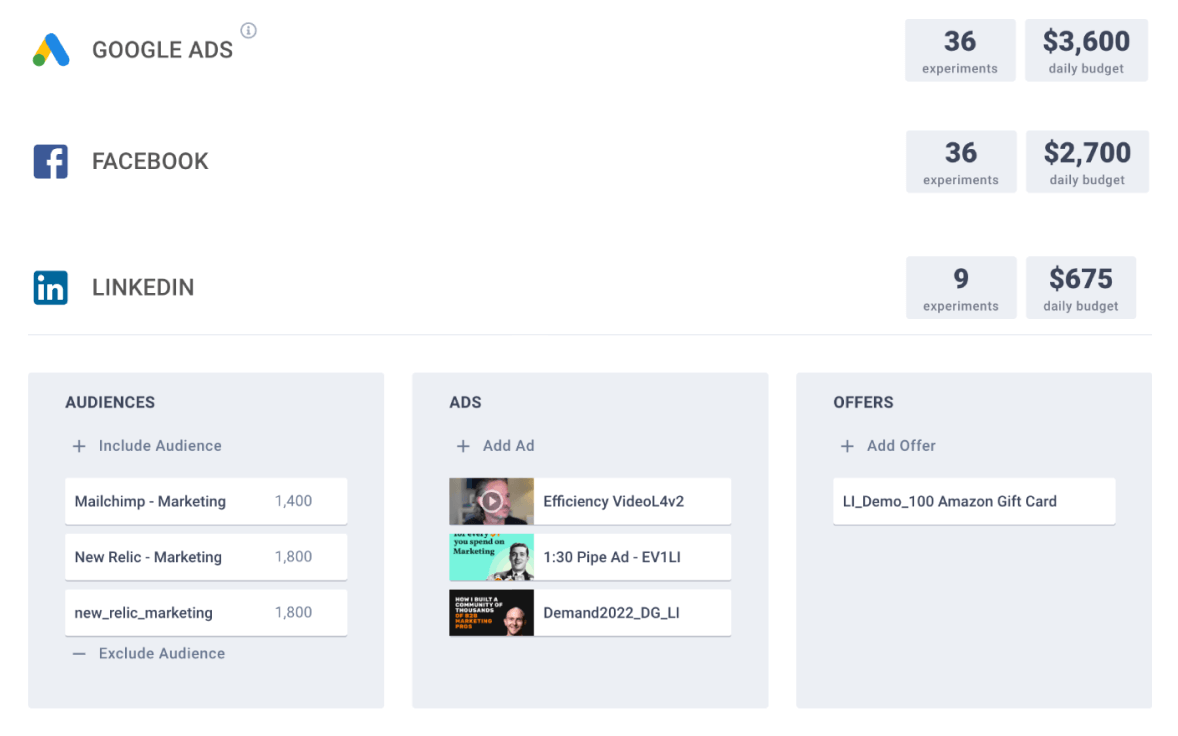
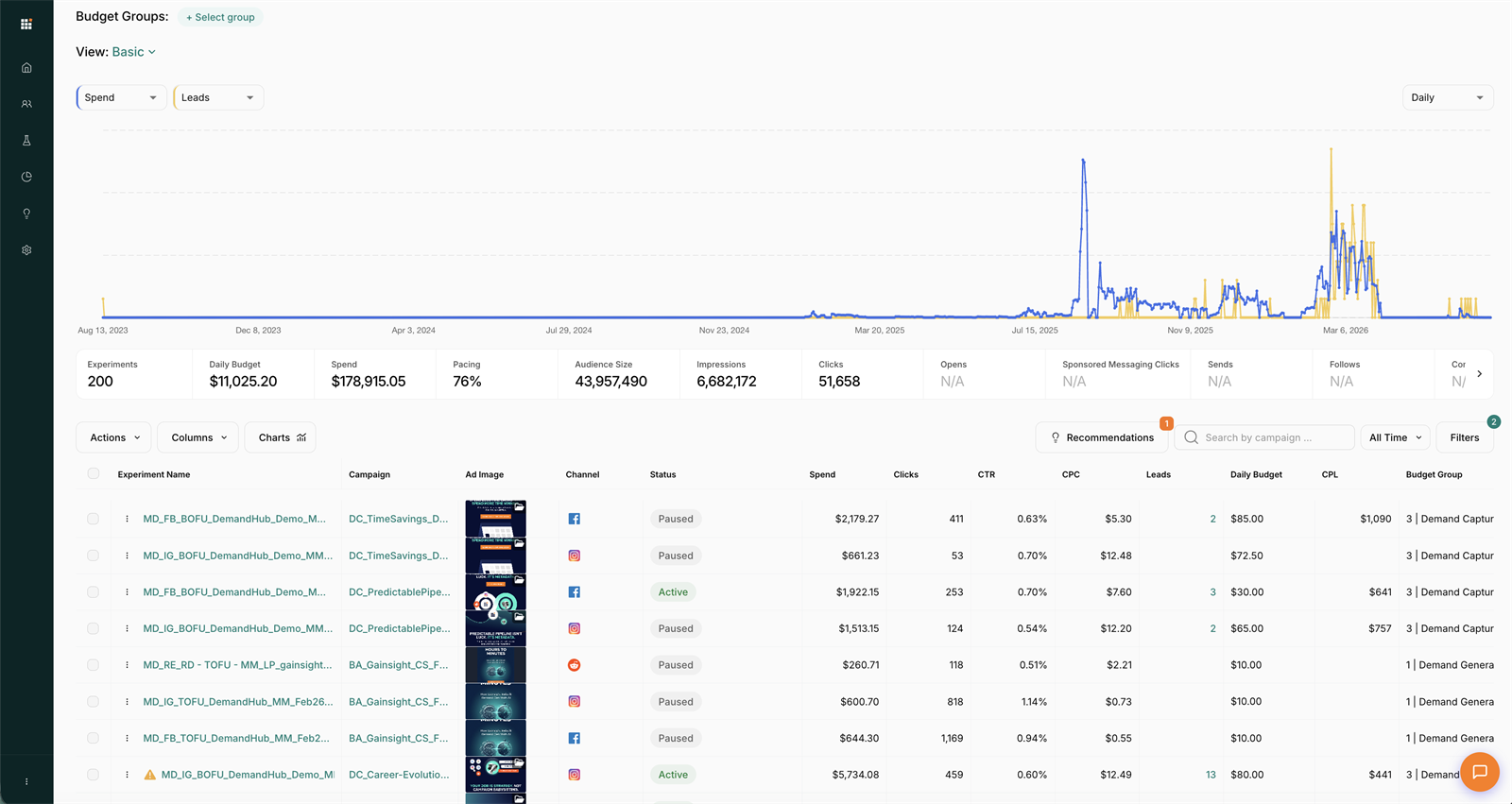
The platform has run 263,554 experiments. It searches audience, creative, offer, bid, and budget permutations, scales the winners, and stops the losers automatically.
Use firmographic, technographic, Bombora and G2 intent, retargeting, native LinkedIn and Meta criteria, and CSV uploads. Apply suppression lists to exclude accounts you do not want to target.
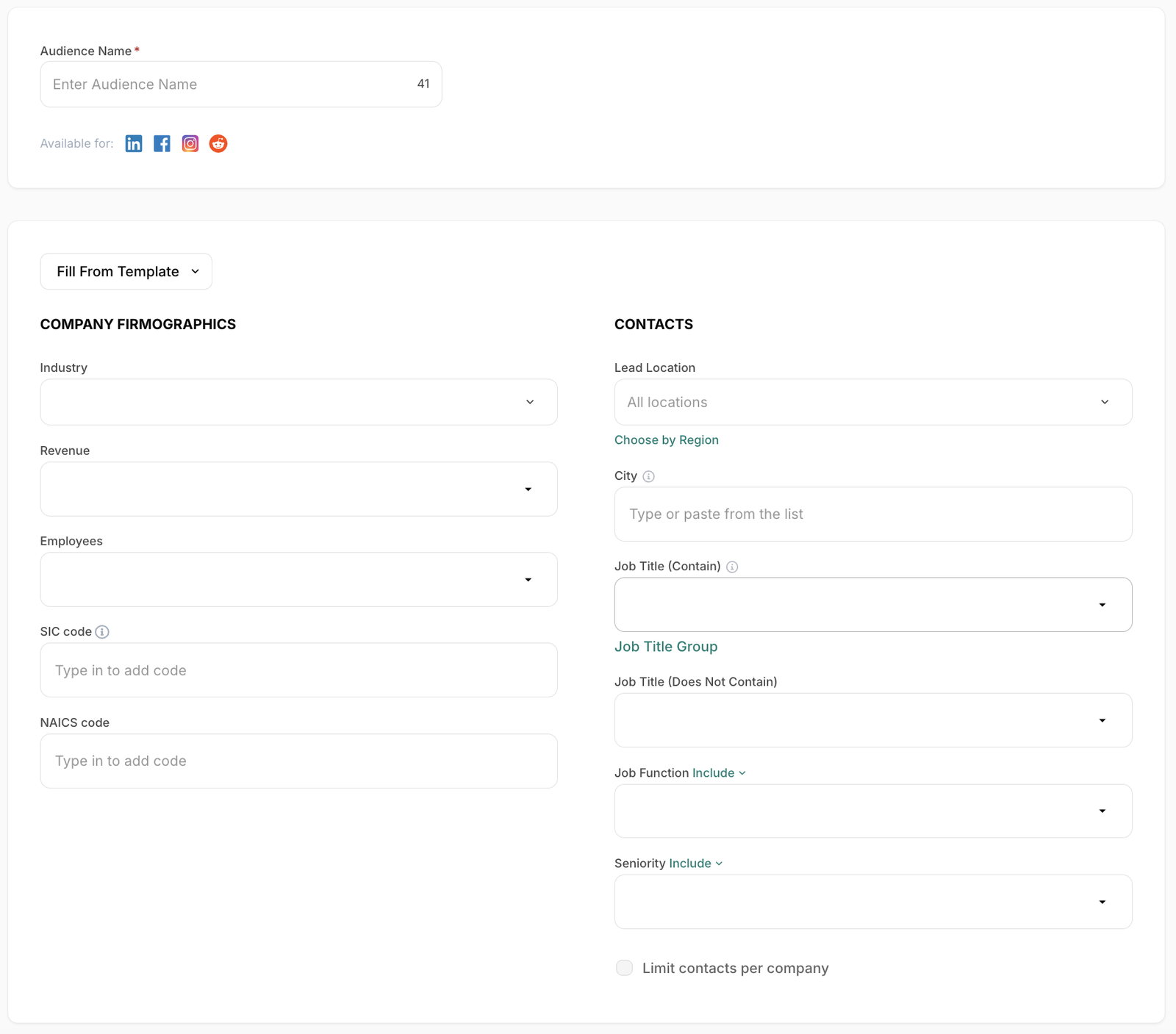
Build audiences using firmographic, technographic, intent, retargeting and CRM signals. Apply your targeting criteria and exclusions before activating a campaign.
Company size, industry, geography, segment, revenue bands, growth signals, and account list membership.
Technology stacks, adjacent platforms, competitive installs, and integration context.
Category, competitor, and topic-level research signals from Bombora and G2 that help prioritize in-market accounts.
Opportunities, stages, customers, open pipeline, closed lost, nurture, and sales-owned accounts.
Website visits, content consumption, demo behavior, video engagement, and page-level context.
Exclude customers, active opportunities, competitors, disqualified accounts, and compliance-sensitive segments.
See which companies view, engage with or convert on your ads. Review zero-click engagement alongside website activity and CRM outcomes.
Connect site activity to companies in your target audience. See which accounts visited and what content they reviewed.
Use company-level engagement to decide which accounts to target next.
Review brand and retargeting engagement alongside CRM pipeline and revenue.
Map every account interaction across paid channels, website, and CRM into one chronological timeline for sales and marketing.
The Metadata MCP server lets your AI assistant work with the product. Any MCP client, including Claude Code and Hermes, can run paid media end to end: build audiences, generate creative, assemble campaigns, set budgets, launch, optimize, and report, all programmatically. The SaaS interface and the API operate on the same objects, so a human can review in the platform exactly what an agent built over MCP.
Audience creation, campaign production and autonomous execution in one product.
Use firmographic, technographic, intent and CRM data to define who you want to reach.
Create landing pages, ad creatives and commercials. Let metadata.io set up, run and optimize your campaigns.
Use the metadata.io app or connect your AI assistant through MCP. Both work with the same product.
metadata.io is one product for B2B advertising. Use audiences on their own, add campaign execution and optimization, or delegate the workflow to AI.
It creates target audiences, landing pages, ad creatives and commercials, then sets up, runs and optimizes campaigns across 12 channels with almost no manual setup.
Facebook, Instagram, LinkedIn, X, Reddit, Google, Microsoft Bing, ChatGPT, display, CTV, OOH and audio.
Your team sets campaign goals, budgets and approval requirements. metadata.io runs and optimizes campaigns within your account controls.