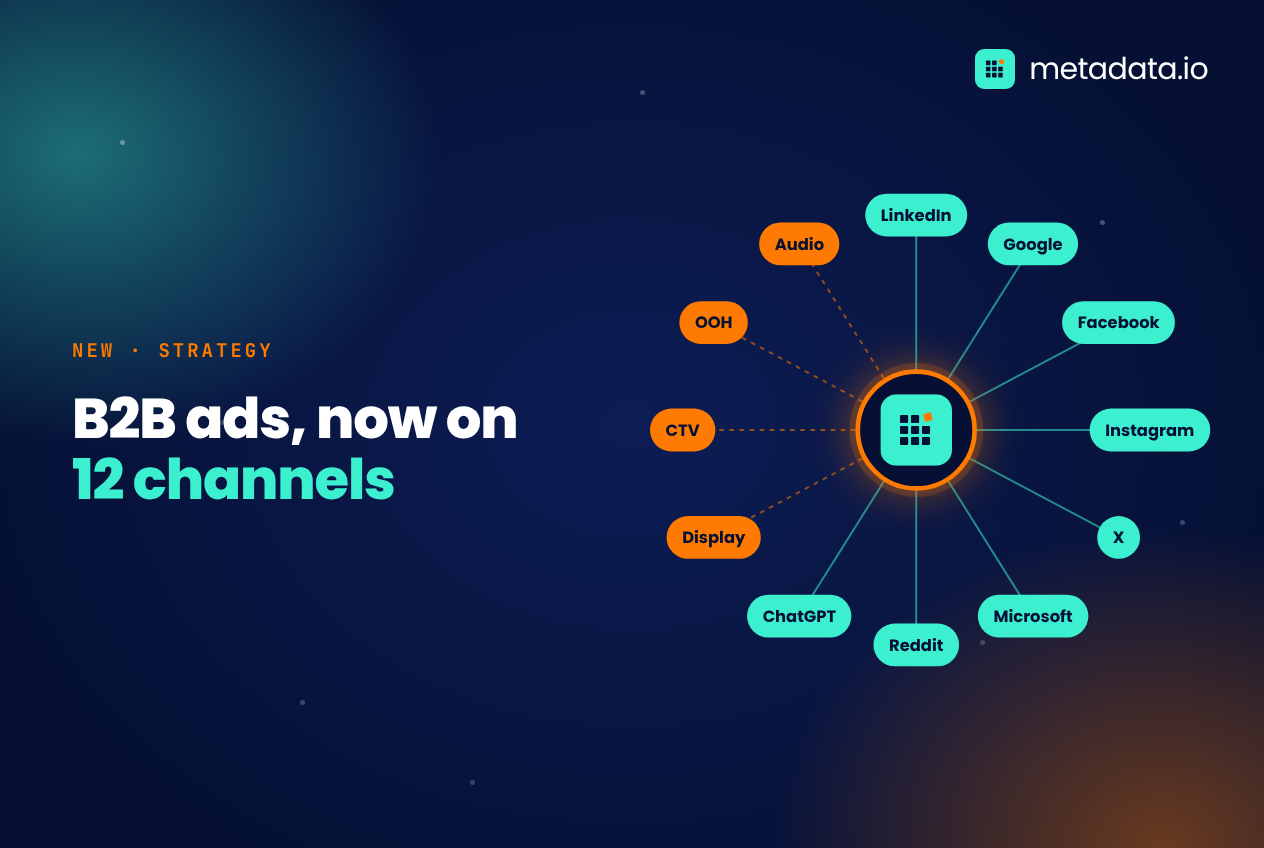
Metadata has run B2B paid campaigns on eight channels: LinkedIn, Google, Facebook, Instagram, X, Microsoft Advertising, Reddit and ChatGPT Ads. It now adds four more: programmatic display, connected TV (CTV), out-of-home and audio ads, including podcasts. Together they cover the places your buyers spend time when they aren’t scrolling a feed or typing a search.
This article explains why we added them, what each one is good for in B2B, and how they fit with the channels you already run.
Why add channels at all?
Because the same buyers on the same two or three channels get expensive. For many B2B teams, most of the paid budget sits on LinkedIn and search, where competitors bid for the same job titles and keywords. Our 2026 benchmark covers $57.6M of 2025 ad spend across 153 B2B advertisers. For the 138 that ran LinkedIn, the median cost per lead was $202 (source).
The buying committee doesn’t live only on LinkedIn. A VP of Finance approving your deal also streams TV in the evening, listens to podcasts on the commute and walks past screens in airports. Those moments are less crowded with B2B ads, which makes them a way to reach accounts your competitors are missing.
What are the new channels, and what is each good for?
Each new channel does a different job. None of them replaces search or LinkedIn.
The four new channels at a glance
Scroll the table to compare all columns.
| Channel | What it is | Best B2B use |
|---|---|---|
| Programmatic display | Banner and native ads on websites and apps, bought across ad exchanges | Keep your brand in front of target accounts between other touches, and retarget site visitors |
| Connected TV (CTV) | Video ads on streaming TV services, watched on a television | Introduce your brand to a buying committee with a sight-and-sound story feed ads can’t tell |
| Out-of-home (OOH) | Digital screens in public places, such as airports, transit and city centers | Build visibility in specific cities or near events and offices where your buyers gather |
| Audio (podcasts) | Audio ads, including ads placed in podcast episodes | Reach professionals during commutes and workouts, when they’re listening but not reading |
Why have B2B teams avoided these channels until now?
Two reasons: targeting and measurement.
Most CTV, audio and out-of-home buying is built for consumer brands. Inventory is sold by age, interest, show genre or location. For a company selling to 500 named accounts, most of that reach is wasted.
Measurement is the second problem. People don’t click a TV ad or a billboard. If your reporting counts clicks and form fills, these channels look like they produce nothing, even when they’re working.
How does Metadata make them work for B2B?
By treating them the same way as the channels you already run.
- One audience across channels. You build an audience once, from your target account list, CRM segments, website visitors or intent data from G2 and Bombora. The same accounts can then be reached on LinkedIn, CTV and audio without rebuilding the list per platform.
- One approval flow. Budgets and creative go through the same review steps, so a new channel doesn’t mean a new set of logins and spreadsheets.
- One view of results. Performance is reported against your CRM, so you judge a CTV campaign by whether its accounts went on to engage and open opportunities, not by clicks.
How should you start with a new channel?
Start small and test against an account list you already know.
- Pick one channel that fits a gap. If your target accounts know your name but don’t engage, try CTV or audio. If you’re launching in a new city, try out-of-home.
- Use an existing audience, such as your tier-one accounts or open-opportunity accounts.
- Set a fixed test period and budget, and agree upfront what success means: engagement lift on other channels, meetings booked or opportunities created.
- Compare accounts that saw the new channel with similar accounts that didn’t. That comparison tells you whether the channel added anything.
If it works, scale it. If it doesn’t, you’ve spent a test budget, not a quarter.
What doesn’t change?
Your capture channels still matter most for demos this quarter. Search, LinkedIn and ChatGPT Ads catch buyers who are already looking. The four new channels widen the group of accounts that will be looking next quarter.
See it with your accounts
The new channels are available now, subject to the channels enabled on your account. Book a demo and we’ll show you how your target accounts could be reached across all 12.
Book a demoRelated guides: Cross-channel marketing | Account-based advertising strategy | Sourced vs. influenced pipeline