Table of Contents
Most B2B marketers build target account lists once, save them in a spreadsheet, and watch them go stale while their ad budget gets wasted on companies that aren’t even in-market anymore. Here’s how to build account lists that stay fresh, focus your spend on buyers who are actually ready to purchase, and turn into real pipeline instead of just another forgotten CSV.
A target account list is a curated group of companies you actually want to sell to. This means instead of blasting your message to everyone, you focus your time and budget on the accounts most likely to buy, stick around, and become great customers.
Think of it like this: you wouldn’t invite everyone in the phone book to your wedding. You’d pick the people who matter most. Same logic applies here.
Most target account lists fail because they’re built once, saved in a spreadsheet, and forgotten. By the time you actually use the list, half the companies have been acquired, changed priorities, or moved on. A good account list isn’t a document you create and ignore—it’s a living part of your strategy that gets updated constantly.
Building a target account list that generates pipeline isn’t complicated, but it does require a process. Here’s the exact method that works.
Your ideal customer profile (ICP) is a detailed description of the perfect company for you to sell to. This isn’t a vague guess—it’s based on real data from your best customers.
Look at the customers who have the highest lifetime value, lowest churn, and actually love your product. Find the patterns between them. What industries are they in? How big are they? What technology do they use?
Write down the specifics:
Industry and vertical
Company size (number of employees)
Annual revenue
Geographic location
Technology stack
This becomes your blueprint for every account you add to your list.
Now that you know what you’re looking for, go find them. Start with your own CRM—look for closed-lost deals that still fit your ICP or old leads that went cold but match your criteria.
Then use data providers like ZoomInfo, Seamless, Clearbit, or Apollo to find new companies that match your firmographic and technographic requirements. Don’t worry about prioritizing yet. Just build a big list of companies that fit the profile.
A list of companies that fit your ICP is fine. A list of companies that fit your ICP and are actively shopping for a solution like yours? That’s where the money is.
Intent data shows you which accounts are showing buying signals right now. Maybe they’re reading articles about the problem you solve, visiting competitor websites, or searching for keywords in your category.
Your list is probably massive at this point. You can’t give every account the same attention, so you need to prioritize.
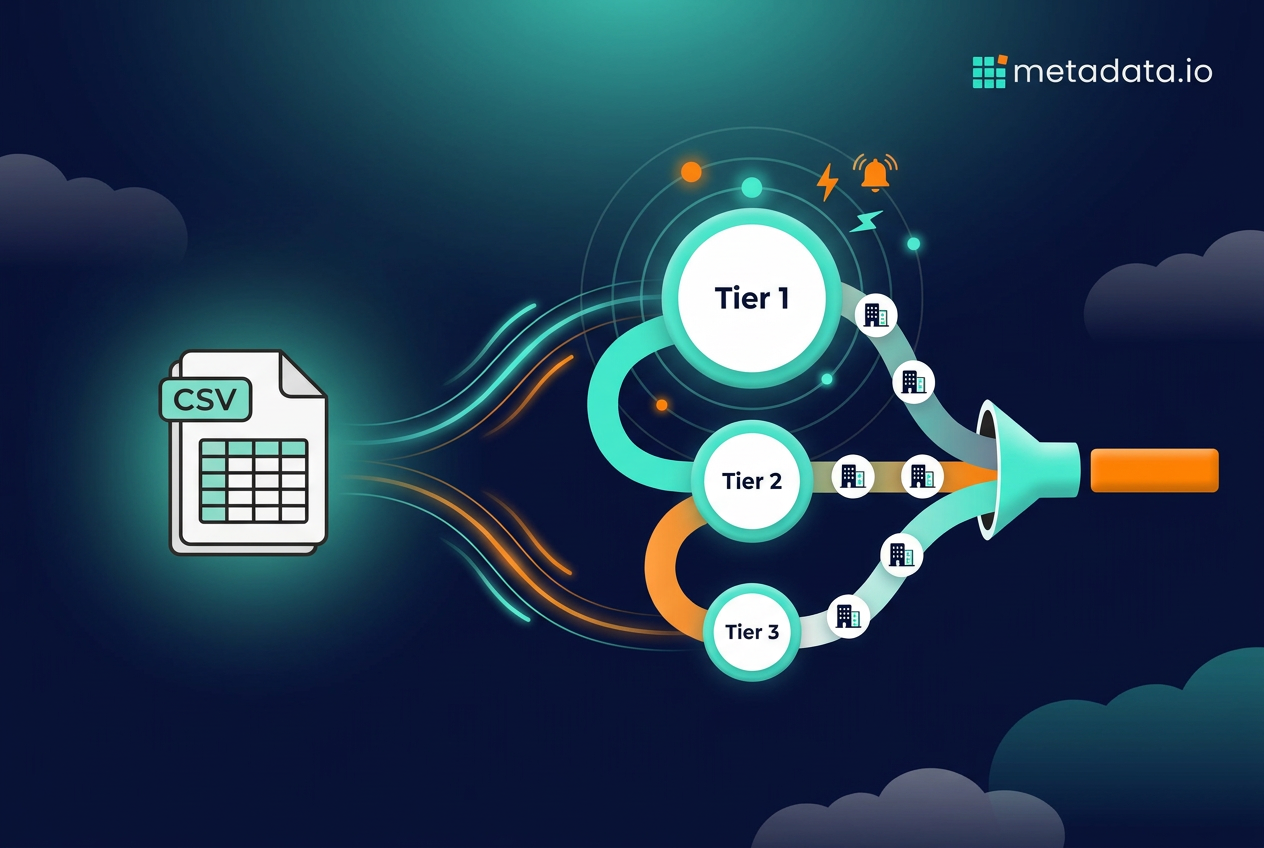
Most teams use three tiers of B2B audience segmentation:
Tier 1: Perfect fit accounts with high intent and revenue potential. These get personalized ads, direct mail, and dedicated sales outreach.
Tier 2: Strong fit accounts that check most boxes but might be missing one or two criteria. These get a mix of personalized and broader campaigns.
Tier 3: Good fit accounts that match your ICP but aren’t showing strong intent yet. These get always-on awareness campaigns to stay top of mind.
If sales doesn’t believe in your list, they won’t work the leads. Simple as that. Sales and marketing alignment starts with both teams agreeing on the accounts worth pursuing—aligned teams are 103% more likely to exceed targets.
Sit down with your sales team and review the list together. Walk them through your process, the data you used, and why you tiered accounts the way you did. Let them flag accounts they’re already working or add ones you missed. This isn’t marketing telling sales what to do—it’s both teams agreeing on a single plan to go after your best customers.
Your target account list is only as good as the data behind it. You need multiple data types to get a complete picture of each account and understand if they’re actually ready to buy.
Firmographic data is the basic information about a company. This includes industry, company size, annual revenue, and location.
This is your first filter. It tells you if an account is even worth considering. If you sell to mid-market SaaS companies and an account is a 10-person startup or a 50,000-person enterprise, they’re probably not a fit.
Technographic data tells you what software and technology a company uses. This is huge for understanding their current setup, pain points, and whether they need what you’re selling.
If you sell a Salesforce integration, you need to know which accounts use Salesforce. If you compete with HubSpot, you want to find accounts whose HubSpot contracts might be up for renewal soon. This data gives you context and a reason to reach out.
First-party data is information you already own about how accounts have interacted with your brand. This includes website visits, content downloads, pricing page views, webinar attendance, and anything in your CRM.
An account that’s visited your pricing page three times is way hotter than one that’s never heard of you. This data shows direct interest and helps you prioritize outreach.
Intent data tracks what accounts are doing across the internet, even before they visit your site. This includes searches, article consumption, and event registrations related to topics in your category.
This is how you find accounts in an active buying cycle. It’s the difference between knowing who could buy and who’s actively looking to buy right now.
Building a target account list is easy to screw up. Here are the mistakes that kill most lists before they ever generate a dollar of pipeline.
If marketing builds the list without sales, it’s dead before it starts. Sales will see it as “marketing’s list” and won’t trust the leads. You need both teams involved from day one or you’re just wasting time.
Companies get acquired. Priorities change. New accounts enter the market. If you build your list once and never update it, you’re targeting yesterday’s opportunities, not today’s.
A target account list needs constant refreshing. Otherwise, it’s just a stale spreadsheet.
Just because a company fits your ICP doesn’t mean they’re ready to buy. Without intent data, you’re guessing. You’ll waste budget on accounts that have zero interest in your category right now, while intent signals accelerate lead conversion by 82% for in-market buyers.
A list with 5,000 accounts sounds impressive, but it’s useless. Your sales team can’t provide meaningful outreach to that many companies, and your marketing becomes too broad to be effective.
Focus on a smaller, tighter list where you can actually make an impact. Quality beats quantity every time.
Having a great list doesn’t mean anything if you don’t activate it. This is where target account selling comes in—the coordinated effort between marketing and sales to engage your accounts and turn them into customers through an account-based marketing strategy.
Take your tiered list and turn it into actual audiences on your ad platforms. Upload your Tier 1 accounts to LinkedIn to run personalized ads. Do the same on Meta and Google.
The problem? Doing this manually across every channel is a nightmare. You’re constantly uploading CSVs, matching company names, and hoping the platform recognizes them. It’s slow, error-prone, and has to be repeated every time your list changes.
Your buyers aren’t just on LinkedIn. They’re on Google, scrolling Meta, and reading industry blogs—B2B buyers use 10 channels throughout their journey. If you only target them on one channel, you’re missing most of the opportunities to get in front of them.
An effective strategy hits your target accounts everywhere they are. This creates the repetition and visibility needed to actually break through the noise and get remembered.
Generic ads don’t work on high-value accounts. Use the data in your target account list to personalize your message with dynamic ad targeting.
If you know an account is in healthcare, your ad should speak to healthcare challenges. If they’re using a specific competitor, call it out. If they’re showing intent for “budgeting software,” your ad should be about budgeting.
This level of personalization shows you’ve done your homework and makes your message impossible to ignore.
The biggest flaw with traditional target account lists is that they’re static. The second you export that CSV, it starts getting outdated.
Your market doesn’t freeze in place. New companies enter your ICP. Existing accounts start showing intent. Others get acquired or pivot away from your space. A static list can’t keep up.
A modern target account list is alive. It updates automatically based on real-time signals. When a new company fits your ICP and starts researching your category, it gets added. When a Tier 3 account suddenly visits your pricing page and a competitor’s site, it moves to Tier 1. When a company is no longer a fit, it gets removed.
This ensures your ad spend and sales efforts are always focused on the accounts with the highest chance of converting. You’re not wasting money on outdated targets or missing hot accounts because your list is three months old.
The real trick is combining all this data. Juggling spreadsheets from your data provider, your CRM, and an intent tool is a recipe for a headache and outdated information. The best approach is a system that pulls everything together and keeps your audiences updated in real time, so you’re always targeting the right accounts at the right time.
Ready to stop building static lists and start running campaigns that actually drive pipeline? See how Metadata turns your target account list into revenue with automated audience building, real-time intent signals, and campaigns that deploy across every channel from a single platform.
Frequently Asked Questions (FAQ)
What is the ideal size for a target account list?
How often should you update your target account list?
What's the difference between a target account list and an ABM list?
How do you measure the success of a target account list?