Table of Contents
AI tools for GTM teams exist to automate the repetitive work that bogs down your marketing, sales, and customer success teams so they can focus on strategy and revenue. This guide breaks down the categories that actually matter—from finding and engaging buyers to keeping your data clean—and how to build a stack that solves real problems instead of collecting logos.
AI tools for go-to-market teams are software that uses artificial intelligence to automate repetitive work and make smarter decisions across marketing, sales, and customer success. This means computers handle the boring, time-consuming stuff so your team can focus on strategy and things that actually need a human brain.
These tools do jobs like finding the right buyers, personalizing outreach at scale, analyzing mountains of customer data, and writing first drafts of content. The whole point is making your GTM motion more efficient without hiring an army of people to manage spreadsheets.
Here’s what makes them different from regular software. Traditional tools require you to tell them exactly what to do, step by step. AI tools can learn from patterns, make predictions, and adjust their behavior based on what’s working. Instead of you manually testing which ad performs better, the AI runs hundreds of experiments and moves budget to winners automatically.
The best AI tools connect directly to your CRM and other systems. This means they optimize for real business outcomes like pipeline and revenue, not vanity metrics like clicks or impressions. When your advertising platform can see which campaigns actually closed deals, it gets smarter about where to spend your budget.
Bottom line: these tools exist to help you stop wasting time and money on things that don’t work. They’re about getting better results without burning out your team or your budget.
Getting in front of the right people is half the battle in B2B. But most ad platforms were built for consumer brands, making it nearly impossible to target specific companies or job titles without wasting a ton of money. AI tools for buyer engagement solve this problem by helping you target with precision and understand what your audience actually cares about.
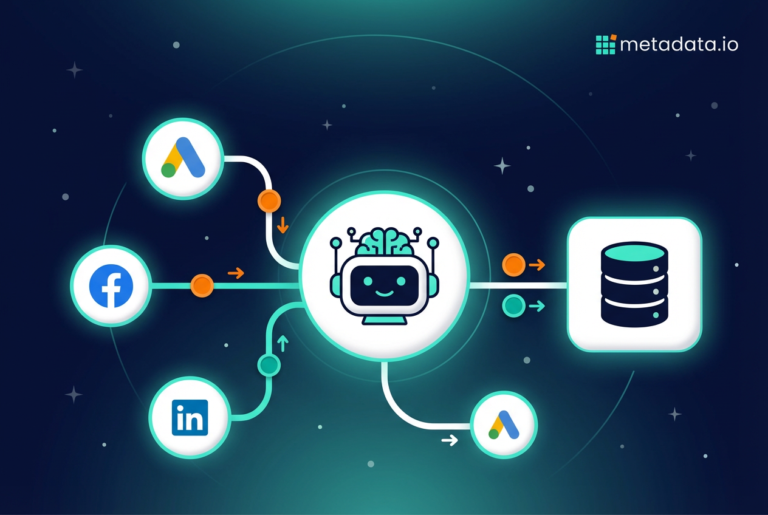
An AI advertising platform sits on top of channels like LinkedIn, Google, and Meta to automate the painful parts of running paid campaigns. This isn’t just another dashboard where you manually adjust bids and budgets.
Think of it like having AI agents that work 24/7 running thousands of campaign experiments for you. They test different audiences, ad creatives, and bidding strategies, then automatically move budget to whatever is actually driving qualified pipeline. The platform connects to your CRM so it can see which campaigns led to closed deals, not just form fills.
Here’s what makes this different from native ad platforms:
The result is you spend less time in spreadsheets and more time on strategy. Your ad budget works toward actual business outcomes instead of vanity metrics that don’t pay the bills.
Conversation intelligence software records and transcribes your sales team’s calls and meetings, then uses AI to analyze what’s being said. It identifies keywords, topics, objection patterns, and even the emotional tone of conversations.
The real value is in the patterns it uncovers across hundreds of calls. You can see which talking points actually resonate with prospects and which ones fall flat. You can spot common objections before they become deal-killers and train your team to handle them better.
Here’s what your GTM team can do with this data:
This is like having a coach listen to every single sales call and pull out the lessons. Except it happens automatically and at scale.
A website personalization engine changes what visitors see on your site based on who they are and what they care about. Instead of showing everyone the same generic homepage, it swaps out headlines, case studies, and calls-to-action to match the visitor’s industry, company size, or behavior.
Say someone from a healthcare company lands on your pricing page. They automatically see a case study from another healthcare customer and messaging about HIPAA compliance. Someone from fintech sees completely different content focused on their pain points.
This makes your website feel less like a static brochure and more like a conversation that adapts to who you’re talking to. The result is higher conversion rates because people see content that’s actually relevant to their situation.
Your sales team should spend their time selling, not doing data entry or playing email tag to schedule meetings. AI tools for sales take the administrative work off their plates and give them the intelligence they need to close deals faster.
Sales engagement platforms are the command center for outreach. They let reps build email sequences, track opens and replies, and manage follow-up tasks in one place. This is the foundation of AI for sales automation.
The AI component makes it smarter. It analyzes engagement data to suggest the best time to send an email or which subject lines get the most responses. It scores leads based on their likelihood to convert so reps always focus on the hottest opportunities first.
Here’s what this looks like in practice. A rep can set up a sequence for a specific persona, and the AI will automatically adjust send times based on when that person typically engages. If someone opens an email three times but doesn’t reply, the AI flags them as high-intent and bumps them up in the rep’s priority list.
The goal is simple: more time selling, less time on repetitive tasks that a computer can handle better.
The back-and-forth of scheduling a meeting wastes hours every week. AI meeting schedulers eliminate this completely by letting prospects book time directly on your calendar based on your availability.
Some tools act as an AI assistant you can CC on an email. The assistant communicates directly with the prospect to find a time, books the meeting, and sends calendar invites. It sounds like a small thing, but the hours saved across a whole sales team add up fast.
The best schedulers also integrate with your CRM to automatically log meetings and create follow-up tasks. This means reps never have to manually update records or remember to send a recap email.
Content creation feels like a constant grind. You need blog posts, social updates, ad copy, and email campaigns to keep your GTM engine running. AI can’t replace human creativity or strategic thinking, but it can speed up the process and help you get past the blank page.
AI writing assistants help you brainstorm ideas, write first drafts, and repurpose existing content. You give them a prompt like "write five headlines for a blog post about demand generation," and they generate options in seconds.
These tools aren’t meant to write perfect, finished content. Think of them as a way to get started faster. They’re great for:
The key is using them as an assistant, not a replacement. The best content still needs a human to add strategic thinking, brand voice, and the kind of insights that only come from experience.
Creating video or podcast content used to require specialized skills and expensive software. AI is changing that by making editing as easy as editing a text document.
Some platforms automatically transcribe your recording. To cut a section of audio, you just delete the corresponding text. The video or audio adjusts automatically. These tools can also remove filler words like "um" and "uh," clean up background noise, and create short clips for social media with a few clicks.
This matters because video is one of the highest-performing content formats, but most teams avoid it because production feels too complicated. AI removes that barrier so you can create more video content without hiring a production team.
Your entire GTM strategy runs on data. If your CRM is full of duplicate contacts, outdated job titles, and incomplete records, none of your other tools will work properly. AI-powered data tools maintain a clean and reliable database automatically so you’re not making decisions based on garbage data.
Data enrichment tools take a single piece of information, like an email address, and automatically add dozens of other data points to it. This includes firmographic data like company size, industry, and revenue, plus technographic data about what software the company uses.
These scalable enrichment solutions for GTM teams are essential for targeting and personalization. With enriched data, you can build highly specific audience segments for ad campaigns. You can arm your sales team with context before they pick up the phone. You can route leads to the right rep based on company characteristics.
Here’s what good enrichment gives you:
The alternative is manually researching every account, which doesn’t scale. Or worse, treating every lead the same and wondering why your conversion rates are terrible.
Every CRM becomes messy over time. People change jobs, reps create duplicate records, and contact information goes stale. AI-powered data hygiene tools work in the background to clean this up automatically.
They merge duplicate contacts, standardize job titles and company names, and flag outdated information. This prevents your team from wasting time on dead-end leads and ensures your go-to-market analytics are based on accurate data.
A clean CRM is the foundation of everything else. If your data is wrong, your targeting will be wrong. Your reporting will be wrong. Your sales team will waste time calling people who left the company six months ago.
With hundreds of AI tools launching every month, it’s easy to get distracted by shiny objects. Building a powerful tech stack isn’t about buying the most AI tools. It’s about buying the right ones that solve your specific problems.
Start with the problem, not the technology. What’s the biggest bottleneck in your GTM process right now? Are you struggling to reach the right buyers? Is your sales team buried in admin work? Is your content production too slow? Don’t buy a tool and then look for a problem it can solve.
| Consideration | What to Ask Yourself |
|---|---|
| Problem First | What manual, repetitive task is slowing down our team the most? Where are we wasting the most time or money? |
| Integration | Does this tool connect with our CRM and the other platforms we already use? A tool that lives on an island creates more work, not less. |
| Impact on Revenue | Can we clearly measure how this tool will contribute to pipeline and revenue? If the vendor can’t answer that question, walk away. |
| Automation Value | Does this tool automate something your team hates doing? The best tools free up people to be more strategic. |
| Adoption Risk | Will your team actually use this, or will it become shelfware? Complex tools that require tons of training often fail. |
Look for tools that connect to each other and share data. A sales engagement platform that doesn’t sync with your CRM creates double work. An advertising platform that can’t see which campaigns drove revenue will optimize for the wrong things.
The goal is building a system where data flows between tools automatically. Your enrichment tool feeds clean data to your CRM. Your CRM feeds account data to your advertising platform. Your conversation intelligence tool feeds insights to your content team. Everything works together instead of creating more silos.
Building a GTM tech stack can feel like collecting logos. But having more tools doesn’t mean you have a better strategy. The goal isn’t to have the most "AI" in your stack. It’s to build an efficient system that predictably generates revenue.
Look at your GTM process from start to finish. Where are the leaks? Where is your team spending time on work that a machine could do better and faster? That’s where you should focus your budget and attention.
The right tool should feel like you hired a specialist who works around the clock to solve a specific business problem. Whether it’s turning ad spend into pipeline or making sure your sales team always talks to the right people, focus on the outcome, not the technology itself.
Most teams overbuy and underuse. They have a dozen tools but only use a fraction of the features. They chase the latest AI trend without asking if it actually solves a problem they have. Start small, prove value, then expand.
The best GTM teams aren’t the ones with the most tools. They’re the ones that have a clear strategy and use technology to execute it faster and more efficiently than their competitors. That’s the difference between a tech stack and a pile of software you’re paying for but not really using.
Frequently Asked Questions (FAQ)
How much should a B2B company spend on AI tools for their GTM team?
Can small GTM teams benefit from AI tools or are they only for enterprise companies?
How long does it take to see results from AI GTM tools?
What's the difference between a GTM AI platform and using individual AI tools?
Do AI tools replace the need for human marketers and sales reps?
How do you measure ROI on AI tools for go to market teams?
What happens to your data when you use AI GTM tools?
Can AI tools integrate with legacy CRM systems like Salesforce or HubSpot?